



If you want to learn English series is one of the best and most enjoyable ways to improve your language skills naturally. For many people, learning English is associated with school textbooks, exercises, and endless vocabulary lists. But modern methods prove that English can be interesting and much closer to real life. One of the most effective — and at the same time enjoyable — ways to boost your English is by watching series in the original language.
In this article, we’ll break down why series actually work, how to use them correctly for learning, and share practical tips so your watching really brings results.
Why Are Series So Effective?
Firstly, series give you real conversational English that native speakers use every day. You hear natural dialogues, genuine emotions, idioms, and slang. That is far more useful than “dry” textbook language because you see and hear how people really communicate.
Secondly, series are built around captivating stories. When the plot grabs your attention, your brain remembers new words and phrases much better because they are linked to strong emotions. Research also confirms that emotional involvement significantly increases the effectiveness of learning.
Thirdly, series help you see and hear language in context. You pick up how to order coffee, say sorry, make a joke, and so on. This builds your language intuition, which is hard to develop just from grammar exercises.
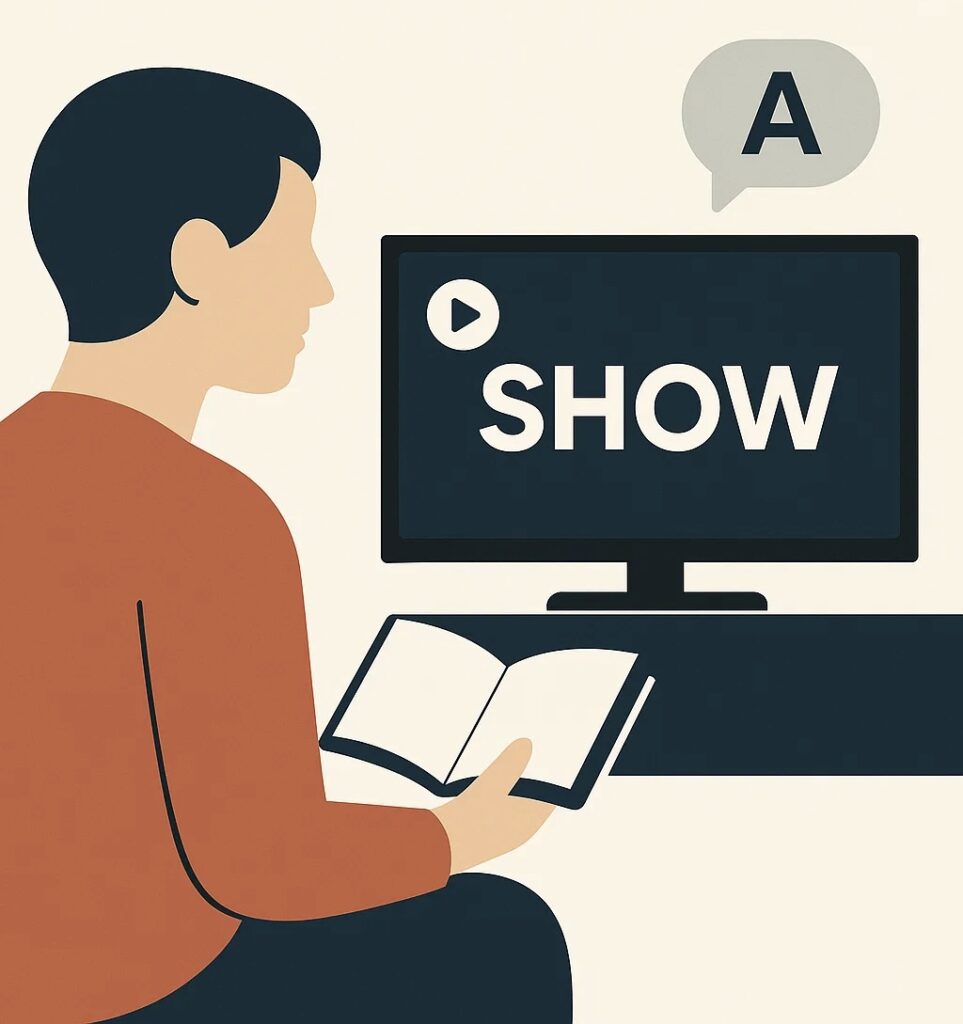
How to Learn English Series Effectively
Choose a series for your level
If you’re a beginner, don’t jump straight into complex detective stories or sci-fi shows. It’s better to start with sitcoms (like Friends) because they have lots of everyday situations and easy-to-follow dialogues.
For intermediate learners, series with a bit more slang and varied language (like Stranger Things or Brooklyn 99) work well.
Use subtitles wisely
At first, turn on English subtitles to get used to the sounds while seeing the text. Later, try switching them off to train your listening comprehension. Avoid using subtitles in your native language straight away, because your brain will immediately switch to your first language and stop training English.
Watch in short chunks
You don’t need to watch an entire 1-hour episode in one go. Even 10–15 minutes a day, but regularly, will help you absorb new material without overload. You can even rewatch the same scene several times to catch new words and focus on intonation.
Pay attention to pronunciation and intonation
Series are the perfect way to hear authentic pronunciation that you rarely get from textbook audio. Repeat some phrases out loud after the characters — it will help you sound more natural and improve your accent.
Create your own dictionary
While watching, write down words or phrases that you like or hear frequently. Then say them out loud or build your own sentences with them. This is the fastest way to move new vocabulary into your active memory.
How to Avoid Mistakes When Learning English Series
To make series really work for your English, avoid some common mistakes. First, don’t choose series with too much specific vocabulary — for example, medical dramas or sci-fi with tons of technical terms — if you’re still not confident with the basics. That kind of content can be demotivating and overwhelming.
Second, don’t watch series passively like pure entertainment. Try to stay focused on the language, notice intonation, spot new phrases, write them down, and practice using them. This will make your viewing active and educational.
Third, don’t expect instant results. At first, understanding English without translation is hard, but it gets easier over time. Stay regular and don’t give up.
Recommended Series for Beginners
If you’re just starting out, the classic and proven option is Friends, with lots of everyday topics, simple language, and natural conversations. For more humor and modern English, try The Office or Brooklyn 99.
If you like adventure stories with a light sci-fi twist but not too much complicated language, check out Stranger Things. And for those who love fashion, urban life, and modern situations, Emily in Paris is a great choice. All these shows will expose you to English in authentic contexts and make learning much more fun.
Why Does This Really Work?
The biggest advantage of series is context. You see facial expressions, gestures, and hear intonation, which helps you catch the meaning even without translation. Plus, series charge you with emotions, and language becomes part of an exciting story — that makes it stick in your memory much more effectively.
Where to Get Even More Practice
If you want not just to listen, but to speak, book an online lesson in our school. A teacher can help you break down phrases from your favorite show, teach you how to pronounce them correctly, and help you overcome the fear of speaking. This is the most effective combination: you watch series, and then immediately practice them in live dialogue. You can also join our special TV show club!

