-
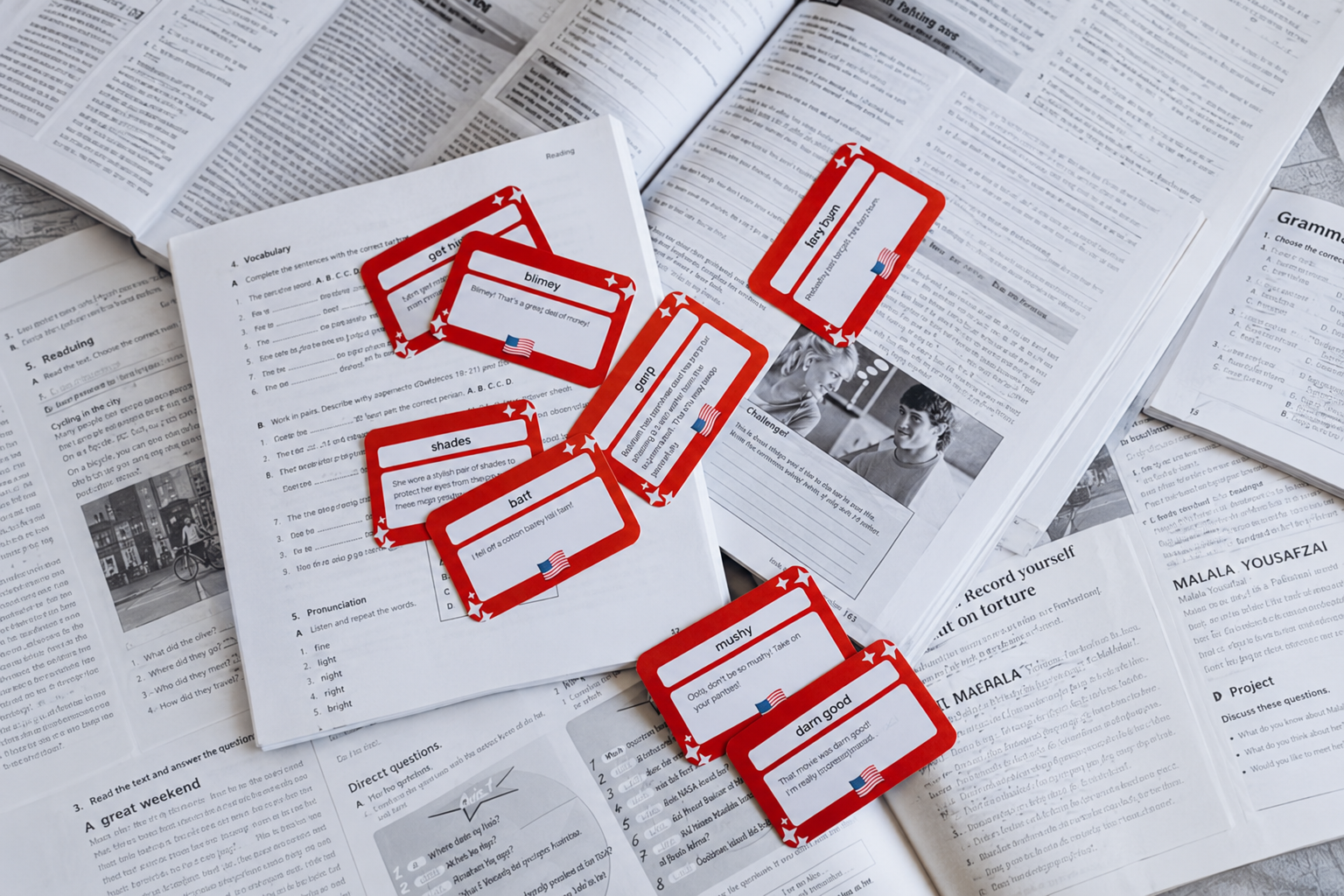
English Vocabulary: How Many Words Do You Really Need to Speak Fluently?
Almost every English learner asks the same question sooner or later: “How many words do I need to know?” It is a fair question, but the answer is more interesting than a single number. Your English vocabulary matters a great deal, yet two learners with the same number of words can communicate very differently. One…
•
-

How to Use English Modal Verbs: Can, Could, May, Might, Should & More
Most learners meet modal verbs early. “Can I have some water?” and “You should try this” are among the first useful sentences in English. Yet modal verbs remain confusing long after the basics are learned. One word can carry several meanings: “must” can express a rule or a guess, and “could” can refer to the…
•
-

English Tenses Explained: A Complete Guide for Learners
Understanding English tenses is one of the biggest challenges learners face, and for good reason. Unlike many languages, English uses a combination of verb forms, auxiliary verbs, and time expressions to show not just when something happens, but how it relates to other events in time. This guide breaks down the entire English tense system…
•
-

Present Perfect Continuous: A Practical Guide
If you’ve ever said “I’ve been waiting for twenty minutes” or “She’s been studying all afternoon,” you’ve already used the Present Perfect Continuous even if you didn’t know its name. This tense connects the past to the present in a very specific way: it shows that something started before now and is either still happening,…
•
-

Present Perfect: Rules, Examples and Common Mistakes
If you’ve ever paused mid-sentence wondering whether to say “I saw” or “I have seen,” you’re not alone. The Present Perfect is one of those tenses that looks simple on paper but trips up even confident intermediate learners. It doesn’t map neatly onto most other languages, which is exactly why it deserves a proper explanation…
•
-

Present Continuous vs Present Simple: What’s the Difference?
“I work from home.” “I am working from home today.” Both sentences are grammatically correct, and both use the word work but they don’t mean the same thing. The first describes a general arrangement. The second describes something temporary and true only for today. This small difference is exactly where many English learners get stuck.…
•
-

IELTS vs TOEFL vs CAE vs CELPIP: Which Exam Fits Your Goal
Four acronyms, one decision and almost no straight answers online. The “right” English exam (IELTS, TOEFL, CAE, CELPIP) depends entirely on what you’re using it for, and mixing that up can cost you weeks of prep time in the wrong format. This guide breaks down all four exams: format, cost, validity, and who each one…
•
-
NMT English Exam in Ukraine: What It Is and How to Prepare
If your child is planning to apply to a university in Ukraine, you’ve probably come across the term NMT and if you’re reading this from abroad, it likely needs some explaining. The NMT exam Ukraine uses for university admission includes an English section that many families, especially those living outside the country, find confusing at…
•
-

Learning English Through Movies and Series: Best Shows & Methods
You’ve finished three seasons of your favorite show in English, yet you still stumble over the Present Perfect in a job interview. Sound familiar? The problem isn’t the show, it’s how you’re watching it. Passive watching is great for relaxing, but it won’t move the needle on your English. For your brain to actually absorb…
•
-

The Ultimate Guide to Conditionals in English Grammar
“If I would have known…” If that sentence sounds fine to you, you have a conditionals problem, and you’re far from alone. Conditional sentences trip up even advanced learners because they encode a precise degree of reality: from scientific fact to an impossible regret about the past. This guide breaks down all five conditional types…
•
13 000 ₴
has already been donated to English lessons for the AFU. Learn more
13 000 ₴
has already been donated to
English lessons for the AFU. Learn more

Donate a lesson to the UAF
50 грн
has already been donated
Your donations will be used to organise training for military personnel to enable them to carry out their duties.


